Pages

Monday, March 14, 2016

ANDROID N

ANDROID N 


                 Google's has surprised us with latest developer  preview of the Android operating system.This early version of the next major Android software update, due to be released later in the year, gives us a good indication of where Android is heading and what we can expect in the full release.For the developer preview the Nexus 5X, Nexus 6, Nexus 6P phones all can run the N preview, as can the Nexus 9 and Pixel C tablets.So let's see what's in the N ?


Menu between the system settings :

               A hamburger menu button (the icon with three lines) has now been embedded into the system settings. When a user is in the Bluetooth menu, for example, they can quickly jump to the other system options using this left side menu. This menu is already a standard in other Google applications.

menuhamburguerandroidnpreview


Direct reply notifications and bundled notifications :

            The notification panel has been completely redesigned, perfectly aligning with what we had seen in earlier leaks. Icons above the notification shade are now more prominent, and on the far right there is a drop down toggle to expand the panel.          

            We've been able to interact with notifications for a good long while now. Not every app supports this, but look at Gmail as an early example. Pull down the notification, and archive an email without actually having to open it.

            Google Hangouts took this a step further, allowing you to reply to messages right from the notification try, without having to open the app, or the message itself. You'll now be able to have bundled notifications. Or, rather, better bundled notifications.


newcentralandroidn


Multi-window mode :

            Wow ! this is a big one , one of the most awaited .The image below shows the multi-window feature, which works on both tablets and phones and mirrors what you can currently get on some Samsung and LG devices.
            Like most major platform changes, developers will have to opt in for the split screen mode to allow their apps to run smoothly. This can be done by adding a new attribute called: resizableActivity. This attribute allows developers to specify the minimum size the app can be resized to and to determine whether resizing will be immediate or the application needs to restart with the required dimensions


multwindowsandroidn

Enhanced Doze mode :

               The energy saving mode Doze has been improved in Android N. Previously, the feature had only worked when the phone had remained completely undisturbed for a long time, i.e. when you're sleeping, but now Google says Doze will also save battery any time the screen is turned off.

AndroidPIT Android Nexus 5 6 0 1 Marshmallow problems


                 Google has really impressed with the latest developer preview , the preview has bugs but it's pretty damn smooth.Android N has got some great feature which will eventually make the smartphone a powerful tool as computer , even a better one. While these are the earliest features , we hope to see more and more lined up for the next iteration of Android. Which one feature did you find the best and which one you would want to see in the next android ? 
SHARE
Facebook Twitter Google

Sunday, February 28, 2016

SAMSUNG GALAXY S7 & S7 EDGE

SAMSUNG GALAXY S7 & S7 EDGE

Galaxy S7 and S7 edge lying flat

               The Galaxy S6 launch was a divisive one for Samsung. It marked a pretty impressive move for the company with the introduction of a new hardware strategy, simpler software, a dramatically improved camera and the innovative new dual curved edge display on the Galaxy S6 edge. Now the company is launching its next volley, the Galaxy S7 and S7 Edge. The new S7 models don’t rewrite the book — they borrow liberally from the S6’s design and feature set. But they bring numerous refinements and improvements, and they restore features that went missing from the Galaxy S6 line. They are, very likely, the best phones that Samsung has ever made.


Hand holding Galaxy S7 edge

            Samsung has tightened up the S6’s overall design for the S7: it’s more comfortable to hold, easier to pick up off of a table, has a flatter fingerprint scanner, and has a less pronounced camera hump. It won’t look unfamiliar to anyone that’s seen or held the S6, and it still looks remarkably similar to the iPhone 6 and 6S depending on which angle you look at it from. The standard S7 retains the 5.1-inch, quad HD Super AMOLED display from its predecessor.The S7 Edge has received a more thorough update: it’s been given a larger, 5.5-inch display (still quad HD Super AMOLED and curved on both sides), and been refined even further. 


galaxy s7 camera module parts showing the dual pixel sensor feature.


              Both phones have support for microSD cards to augment their 32GB of internal storage , as well as IP68 water and dust resistance, which allows for submersion in up to 1.5 meters of water for 30 minutes at a time. The S7’s waterproofing includes sealed ports, so there are no fussy port covers over the USB ports or headphone jacks.
      

Galaxy s7 placed on wireless charger

               S7 line is powered by Qualcomm’s Snapdragon 820 processor in North America, a departure from Samsung’s own Exynos chips that were in the S6.The RAM has been stepped up to 4GB this time around.Perhaps the most significant change this year comes in the S7’s new 12-megapixel camera. It’s lower resolution than last year’s 16-megapixel shooter, but Samsung says its larger pixels let in 56 percent more light than before for better low-light images. The camera’s lens is a brighter f/1.7 aperture, allowing in 25 percent more light.

           The S7 models are running Android 6.0 Marshmallow with Samsung’s TouchWiz interface. There are a couple new enhancements for the S7’s edge-swipe features, but the big new software trick is the always-on display, which permanently shows a clock with notifications, a calendar, or an image on the S7’s screen.


           Though the S6 was a huge success but the economy  hit Samsung making it loose it's market share as well as profits in its mobile division.he S7 and S7 Edge are not reinventions of the wheel, but iterations and refinements, and they healed some pain points of the older models. Whether this would hekp Samsung Bounce back on the market gain , only time will tell ? 
           
SHARE
Facebook Twitter Google

Sunday, January 31, 2016

CES 2016 :WEARABLE'S

CES 2016 :WEARABLE'S 

            Wearable's have seen a tremendous growth since the last year. This new segment or category is now only getting more competitive as well as getting more innovating from the previous player's in the market.personalized wearable's are now every tech companies pet project to go out to the consumer. The Consumer Electronic Show 2016 was not away from getting the fever of the smartwatch and fitness wearable's category.So let's look at what CES 2016 should us in wearable's.

Samsung Gear S2 Classic

     Samsung Gear S2 Classic-17  
   
               When it come's to wearable's we can't keep Samsung out ,Samsung used CES 2016 to announce two new models of its Gear S2 Classic smartwatch. The two devices are identical in technology to the original but not in terms of build materials.
One is plated in 18-carat rose gold, while the other is plated in 100 per cent platinum, both built from stainless steel underneath. They will come with dedicated new watch faces, with four additional choices in total and they will also feature NFC for Samsung Pay. Pricing has yet to be announced but apparently it will be less than the most expensive Apple Watch Edition, so under £13,500 then.

Misfit Ray


              The Misfit Ray is an aluminium modular activity tracker that can be worn on different areas of the body thanks to its ability to attach to jewellery. It will track movement and sleep and it features a six-month battery life, along with a water resistance up to 50 metres.
There is a vibration motor on board, as well as a multicoloured LED light, allowing the Ray to offer inactivity alerts, text or call notifications and a vibrating alarm. It will be available to pre-order for $100 in Rose Gold and Carbon Black.

Withings Go

       
             The Withings Go is a cheap activity, sport and sleep tracker that will get you moving for £50. It features an E Ink display which allows it to offer up to eight months of battery life and it is both Android and iOS compatible.
The Go will track steps, distance covered, sleep and sports including running and swimming, offering water resistance up to 5 ATM. The company claims the Go will be able to differentiate between activities and it will come in black, blue, green, red and yellow colour options.


Casio WSD-F10


             Casio announced its first smartwatch at CES 2016 in the form of the WSD-F10. It runs on Android Wear but it is a little more rugged than its competition with water-resistance up to 50 metres and MSL-STD-810 military compliance.
There is a 1.32-inch screen on board offering a resolution of 320 x 300 and a choice between monochrome and full-colour mode. The WSD-F10 comes complete with a pressure sensor, compass and accelerometer, with users able to check altitude, air pressure, tide graphs and activity, among other things. The Casio WSD-F10 comes in black, orange, red and army green colour options, will cost around $500 and will be available un the US in April.

Fitbit Blaze


           Fitbit announced a new, more fashionable smart fitness watch called Blaze. The new activity tracker features a colour touchscreen along with a five-day battery life and smart notifications.
Blaze features PurePulse Heart Rate tracking like the Fitbit Surge and Fitbit Charge HR and it is compatible with iOS and Android devices, with data synced wirelessly to the Fitbit app. The Blaze will recognise select activities automatically, is water resistant and there are numerous bands available in various colours and materials. The Fitbit Blaze starts at £159.99 with the classic elastomer band. Pre-orders are open now on Fitbit.

Razer Nabu Watch


          This is a rather unique example of a smartwatch as it uses two screen and two battery power sources. Primarily it's a watch, using a 12-month cell battery to power the clock, alarms, stopwatch and all the stuff you'd expect from a normal watch.
It has a second OLED display however, used for smart notifications from a connected iPhone or Android smartphone. This displays notifications for calls, texts, emails and app alerts, as well as step and sleep tracking. The Razer Nabu Watch will be available in late January for $150 or €180. The Razer Nabu Watch Forged Edition, which is made from more premium materials, is available now for $200.

Garmin Varia Vision

   
Garmin Varia Vision.54


           Garmin announced its first heads-up display for cyclists at CES 2016. The Varia Vision is a display unit that will attach to glasses and allow the user to see its screen while still focusing on the road ahead.
It will display cycle data, turn-by-turn navigation and smartphone notifications with everything controlled via the touch-sensitive panel on the side that will even work with gloved hands. The Varia Vision offers up to 8-hours battery life, light sensors and it will connect to a Garmin Edge device. It will begin shipping in Q1 for £320.


SHARE
Facebook Twitter Google

Tuesday, January 19, 2016

Endless : PC that makes Internet Offline

Endless : PC that makes Internet Offline

New PC Makes the 'Internet' Available Offline

           San Francisco start-up Endless has an unusual business plan in this age of the smartphone and tablet.Where everyone is trying to be connected all the time , Endless is a company which is thinking about where countries have very little or no connectivity at all. Endless is aiming for that percent of people who have less access to the connected world to at least do the basics stuff that the net provides.

            The company unveiled a grapefruit-sized spherical desktop this week at the International Consumer Electronics Show in Las Vegas. Called the Endless Mini, the device's true innovation may be the way it holds key websites on its hard drive even when there is no Internet connection - as well as its rock-bottom price of $79, which might finally get modern technology into the hands of the world's poorest citizens.

            Endless conducted extensive research of developing markets and found that consumers want more affordable computers, not just smartphones. The Endless Mini comes preloaded with 650 megabytes of content, such as Wikipedia articles or educational materials from the Khan Academy, that could be searched and used without a connection. The idea is to give people the benefits of the Internet without having to pay the expense of a robust data plan.If the computer ever is connected to the Web, it will download the latest versions of the articles that have updated.

             So the Endless Mini is just a PC without the monitor,keyboard or even the mouse. So the company is saying that, it's selling the CPU at no-profit and is aiming to have a profit in seeling the accessories like monitors, keyboards, mouse etc.

              The base model comes with 24 gigabytes of storage, is powered by an ARM Cortex-A processor and includes over 100 applications, including options for word processing, making spreadsheets and playing games. The operated system is based on Linux.

                 Endless is targeting Guatemala as its first market and plans to grow to Mexico and China. It estimates that the global market for a $79 (roughly Rs. 5,200) computer is about 2 billion. Endless has arranged financing that allows Guatemalans to pay off the device for $3 (roughly Rs. 200) a month.

SHARE
Facebook Twitter Google

Monday, January 4, 2016

A LOOKBACK IN THE YEAR 2015

A LOOKBACK IN THE YEAR 2015


           It has been a great year for the technology lovers and also to the future of electronics.We have seen the new growth of some new categories as well as advancement in the old. We will look back in time to see how the world shifted in technology.

           We will see some defining moments in the technology :

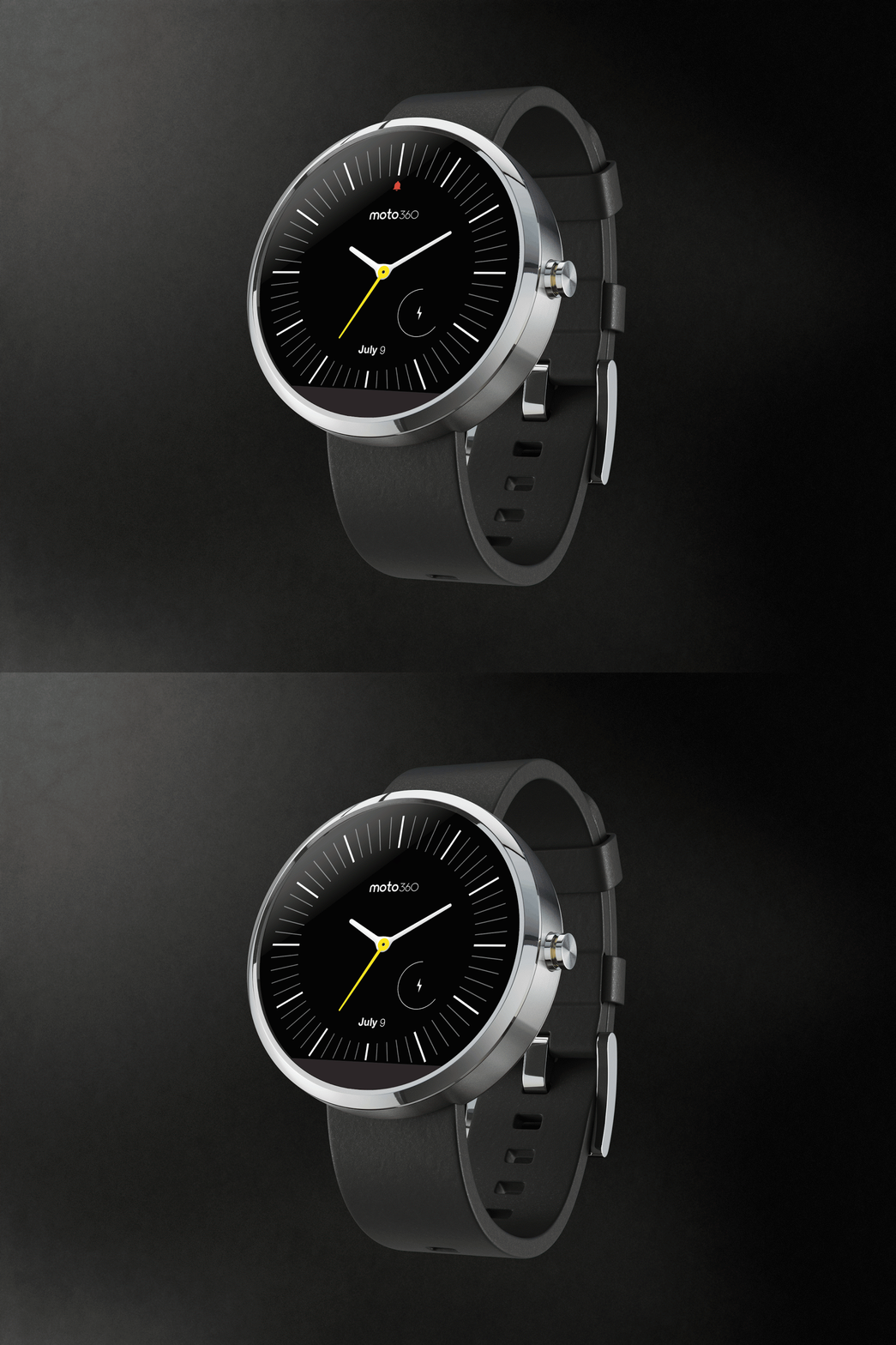
  1. Moto 360 2 :
           The original Moto 360 was a great  start for the wearable smart watches department. Since then smart watches have seen a great improvement in their technology as well as design stats.The next Moto 360 did see improvements in overall performance as well as design.Android Wear is still new and as well as the smart watch market.So the next 2-3 iterations should have more stability in this market. Moto 360 2

     2. Asus ZenBook UX305 :

           Asus Zenbook UX305 is no ordinary laptop , but world's slimmest laptop in the market. Asus not only mastered the weight and design factor but also the performance with it. Asus ZenBook UX305 not only master's the slimmest quotient but also the powerful one. Asus Zenbook UX305.

     3. RAZER McFly : First Hover Mouse  
     
           This will be a whole new leap in the mouse technology over the years. Razer's new hover mouse is great replacement with the standard mouse technology. RAZER McFly : First Hover Mouse  

     4. iPhone 6S & 6S plus

            iPhone 6S became the successor of the most popular iPhone 6.iPhone 6S came with new additions like 3D Touch and better improvements in TouchID . As with all successor's this iPhone also improves in all departments. iPhone 6S & 6S plus.

     5. Android Marshmallow  
                       
            Android Marshmallow is not much design improvements but more on performance. While keeping the old Material Design from Android Lollipop , Marshmallow come with all performance improvements. From battery life improvements to more app permissions to users Marshmallow is truly a deserved update to Lollipop. Android Marshmallow  

     6. Samsung Galaxy Note 5

           Samsung has always surprised us with their Note line , Note 4 was a huge success and the Note 5 adding more to it. Note 5 came with a fresh design of metal solid body and a more sensitive stylus . Samsung's Note features made  the Note more user functionality as well as increased multitasking abilities. Note 5

      7. iPad Pro

           Apple fans after a long wait got the increased size of iPad, but after long time it's feeling like it's a mee-too product of the Surface. Though iPad Pro has iOS software whereas Surface runs a full desktop OS. So it's still more iterations to have a little closer to the PC. iPad Pro.

      8. Button Sized Computer
   
           With Intel releasing this kind of button sized computer , wearable technology will only see progress and more tech wearable's will be seen in the market. Intel's new chip is a low powered cpu which can hold , the amount of data that is sufficient for mobile tech.Intel Button CPU

      9. Nexus 6P & 5X

              Nexus line had the first minor upgrade of it's previous versions of Nexus series. The Nexus 6P & Nexus 5X both are a great addition to the existing Nexus line.Both have finger-print reader's on the back and are more powered. Nexus 6P & 5X.

    10. Microsoft Hololens

               Microsoft Hololens was the newest innovations in the Argumented Reality space , when most of the major companies are looking in VR as new market. Microsoft should us the different option of AR in the market. Microsoft Hololens.

     11. OnePlus Two 

                OnePlus One was a true flagship killer as it mentioned it. OnePlus Two  is the successor to the widely approved Oneplus One , where it makes more advancement's in the next iteration. OnePlus Two also received the same kind of response as it's flagship ,as more advanced hardware and features. OnePlus Two kept the customers satisfied as did it's predecessor. OnePlus Two .

     12. Nvidia Tegra X1
           
                 Nvidia showed a giant leap in the processor technology , the first processor to clock 1 teraflops of speed. Nvidia Tegra X1 is a 64 bit ARM processor with 20Nm SOC which consists of 8 cores in it. Tegra X1 is a truly powerhouse in it's manner. Nvidia Tegra X1  

                  CES 2016  is on it's way and let's hope that the company's show more products which will amaze us and make us believe that this might be possible with technology.We will bring you all the major updates so stay tuned .

* Tell us how you liked and which gadgets were not deserving or should be added to the list.


SHARE
Facebook Twitter Google

Tuesday, December 22, 2015

HP SPECTRE X2 : REVIEW

HP SPECTRE X2 : REVIEW


              It's been a trend in the past few months : Every tech company is making a mi-two product like the Microsoft Surface Pro 4.A laptop/tablet mashup is getting better every generation and iteration it is out.There are different examples: the iPad Pro from Apple, Google's Pixel C, as well as offerings from Lenovo and Dell. But HP's latest is an especially literal interpretation. The Spectre x2, as it's called, is a 12-inch Windows tablet with a keyboard cover.Also like the Surface Pro, it sports a kickstand around back and can be used with a pressure-sensitive pen. But, it's cheaper and the keyboard actually comes in the box. On the box , this looks like a groundbreaking product in comparison with the Surface pro 4, but in real-world will it really outcast it ?

Design & Features :

           
               A slate tablet with a detachable keyboard case, the Spectre x2 shares a similar design with the Microsoft Surface Pro 4 and its predecessors. The Spectre x2 has a matte-silver finish on its back, with a chrome HP logo. A stainless-steel, U-shaped kickstand pops out of the back panel when you slide the release on the left side of the tablet. The kickstand offers a wide range of angles, so you can use it from a seated or standing position, propped on a table, or on your lap. Like the Surface tablets, the kickstand may dig into your leg if you're using it on your lap.


            The aluminum-clad Spectre X2 measures 0.31 by 11.93 by 8.23 inches (HWD) and weighs 1.88 pounds alone and 2.72 pounds with its keyboard cover attached. That's a bit heftier than the Microsoft Surface Pro 4, which is 0.33 inches thick and weighs 1.73 pounds sans keyboard. It's a measurable difference, but you're unlikely to notice unless you compare them side by side. The keyboard case adds 0.21 inches to the tablet's thickness (for a total of 0.52 inches), but the depth and width remain the same.

Display


              At the center of everything is the 12-inch IPS display. The resolution is capped at 1,920 x 1,080, which is lower than some competing products, including both the Surface Pro 4 and iPad Pro. Still, on a screen this small, the difference would be subtle at best, so in the interest of keeping the cost down, this was a fine compromise. Even if the screen angle weren't adjustable, which thankfully it is, I would have had an easy time making out the screen. As a warning, the glossy panel doesn't completely repel glare, but color and contrast at least stays mostly consistent as you tilt the screen forward and back.
              Lastly, the x2 is compatible with pressure-sensitive  pens just what Microsoft use's  same technology for the Surface Pro  , HP sells an active pen on its site for $30, though any Wacom pen using the same technology will do.


Performance & Battery Life :


             The Spectre x2 comes with your choice of Core M3, M5 or M7 processor. It's the same idea as Core i3, i5 and i7, except that Intel Core M sacrifices speed for the sake of achieving especially thin and light designs, like the one we have here. The unit  tested was with a dual-core 1.2GHz Core M7-6Y75 processor, Intel HD 515 graphics and 8GB of memory. Even with the best specs offered, benchmark scores still trail new machines with Core i5 chips, including the Surface Pro 4.

             The LiteOn solid-state drive delivered max write speeds of 554 MB/s in ATTO's disk test, which is in line with many other SSDs we've tested recently. Even so, though, it takes the Spectre x2 about 15 seconds to boot into the desktop, whereas it might take a faster machine around 10. 
        
               HP rates the Spectre x2 for 10 hours of battery life. (Note : Under HP's perfect conditions , which is hypothetically not possible ). Perhaps it's possible to achieve 10 hours of use if you lower the brightness to a fairly dim setting and use the machine intermittently. For us we never came close to reaching that milestone. With an HD video looping and the brightness fixed at 65 percent, the x2 managed six hours and 43 minutes.


RealSense Camera : 


               The Spectre x2 features an integrated webcam in front and interestingly, a RealSense camera on the back. Where the Surface Pro 4's front-mounted, RealSense-like camera is intended for facial recognition with Windows Hello, HP expects its camera to be used for RealSense applications. Right now it’s a work in progress: The one app available was a beta for itSeez3D, which allows you to make 3D models of a person. I tried scanning a co-worker in two different lighting situations, and the results weren’t pretty.
screenshot 2015 12 02 13.28.34

Keyboard


             The Spectre x2 might be slower than the competition, and the battery life might not be as long, and the screen might not be as sharp, but damn if it doesn't have one of the best keyboards I've seen on a device like this. The metal keyboard feels sturdy, for starters, which goes a long way toward making it comfortable to use in the lap. It's backlit -- another plus. And, perhaps most importantly, the keys are generously sized with an impressive 1.5mm of travel, making them uncommonly cushy for a product in this class.
           
             Also, I like how HP gives you a choice of resting the keyboard flat against your desk (or lap), or instead folding up the top to attach to magnets inside the tablet's lower bezel. This gives the keyboard a lift in the back that for some will translate to a more ergonomically sound experience.
Too bad the touchpad isn't nearly as refined. When it works it works well, with smooth enough scrolling and precise cursor tracking. But it doesn't always work. Wasn't always able to get the pointer to go, and I frequently found myself accidentally rearranging pinned browser tabs.Bottom line a great keyboard but a bad mouse (touchpad).


Wrap-up


             In this increasingly big world of laptop/tablet hybrids, the Spectre x2 isn't a bad choice, especially at this price. But that doesn't mean it's the best. The x2 is not the fastest, the longest-lasting or the most comfortable to use in the lap. It's screen is not the sharpest. But it's keyboard is arguably the easiest to type on of any click-in dock I've seen, and the audio is surprisingly decent. If money is no object, you will probably be happier with the Surface Pro 4. But, if you were hoping to avoid spending $930 just for the entry-level SP4 and keyboard, the x2 is a fine runner-up.
SHARE
Facebook Twitter Google

Wednesday, December 9, 2015

OnePlus X : Review

OnePlus X : Review


               The OnePlus X is the mid-budget smartphone buy the company who makes flagship killer's.The One Plus  company is just 2 years old and this is the third phone from the company with the previous two being blockbusters. . Making the X, OnePlus eschewed its usual formula of stuffing the best processor in a ridiculously cheap phone. Instead, it has re-purposed the internals of its debut OnePlus One into a smaller phone with a lower $249 price tag.Let's see if it wow's the mid-range customers ?

Look and feel          


                    First of ,the OnePlus  X is smaller and easier to handle than either of the company's previous smartphones. Apart from the obvious difference in screen size that dictates the length and width, the OnePlus X is also considerably slimmer at 6.9mm. Combined with a metal frame, glass back and a slight curve in the glass front at its edges, the X is attractive and feels great to hold.

                     The back of the OnePlus X is glass, and is surprisingly sturdy and resistant to damage.he black material under the glass makes the back highly reflective, a look we rather like. The top-left corner has the camera and flash, while the OnePlus logo sits just inside the top-third.However speaking of the back , is made of glass , so it's no doubt that this one is a fingerprint magnet, but when we say the white one in comparison to the black , you can't see the fingerprint enhanced in white as they do in the black variant.


                      The frame of the OnePlus X is metal, with a lined pattern that continues all around the device. The top has the 3.5mm socket and a secondary microphone, the left has the notifications slider, the bottom has the speaker grille and USB port, while the right side has the power and volume keys and the SIM tray. There are two visible grilles at the bottom, but only the one on the left actually houses a speaker. The right grille is designed that way only for design symmetry.

                        The  notifications slider is another feature we found interesting. This is a three-position switch which lets you choose how many notifications you wish to receive. The lowest position will allow all notifications through, the middle position will only enable priority notifications, while the top position blocks everything.

Display


           The OnePlus X has a 5-inch display , which is a 1080p AMOLED, that typically means superb viewing angles, bright colors and blacks beyond the event horizon. There's no contradiction  here. Colors are indeed punchy ,viewing angles are great and of course,since AMOLED doesn't have a back-light, the overall blacks are fantastic.But there are some issues, it's not laminated, and there's quite a gap between the display and the cover-glass. It's not a huge issue, but it's there. I also take issue with the color balance of the display.If you look closely you will have that color shifeted , otherwise it's just a normal display.
      
           Otherwise ,the display is one of the nicest display's , I have ever seen in this budget smartphones. The display does all the essentials, with minor issues that can be neglected, the One Plus X gets a thumbs up for the display.

Camera

          The OnePlus X has a 13-megapixel f/2.2 primary camera with single-tone flash, along with an 8-megapixel f/2.4 front camera. Both are capable of recording up to 1080p video in normal mode. The rear camera can additionally record slow-motion video at 120fps, but only at a resolution of 720p.The camera app is designed to look like Google Camera, but has a few differences. There are buttons for quickly toggling the flash, self-timer and camera switcher, but accessing beauty, HDR and clear image mode is a two-step process. Video, panorama, time lapse and slow-motion modes also require some swiping to get to. Although Oxygen 2.1 brings a manual mode to the OnePlus 2, manual settings remain absent on the OnePlus X even after the update. You can, however, easily set the photo and video resolution.
 

          The camera itself is quick to shoot, and is excellent in terms of color and lighting reproduction. Shadows and sunlight interweave splendidly in outdoor shots, while indoor pictures bring out the best in both well-lit and low-light conditions. Unfortunately, that's where our praise for the camera ends. Looking at our sample shots closely, we found a glaring lack of detail in every shot we took.Noise and grain are plentiful without even zooming in all the way, and it's impossible to distinctly make out any detail in pictures of subjects that are more than a few feet away. Even in close-ups, anything outside the focus area is utterly lacking in definition and clarity.

Software


           OnePlus Oxygen OS is very good. I hadn't really spent time with it before the X arrived -- unless a cursory swipe across home screens on a OnePlus 2 counts -- but I'd like to spend more time with it now. If you've used stock Android, you won't find too many differences visually, but there are some additional, genuinely customization options on offer.By default the phone has a "dark" theme, which changes the menus to a deep black and the app drawer to a dark gray. In theory, due to the peculiarities of AMOLED technology, this uses less power than the regular white Android theme.

          In the settings menu you'll also find some other options, one of which lets you deactivate the capacitive buttons and opt for on-screen instead.There are a few token gestures for when the screen's off -- double-tap to wake up, draw a V for flashlight, an O for Camera, etc. -- and a weird "Shelf" thing for storing frequently apps that I switched off, but you're mostly just looking at Android Lollipop, for all its good and bad points.

Performance & Battery 


          The OnePlus X runs on a 2.3GHz quad-core Qualcomm Snapdragon 801 SoC with an integrated Adreno 330 GPU. This chip was used in many of the popular flagship smartphones of 2014. Although it's not the most modern now, it's still a capable SoC that offers excellent performance and outdoes this year's Snapdragon 615 in most benchmarks.The OnePlus X performed capably in most of our benchmark tests. It scored 24fps in GFXBench and maxed out in 3DMark Ice Storm Extreme, producing a score of 16,207 in Ice Storm Unlimited. AnTuTu returned a score of 40,773, while Quadrant produced a score of 24,013.


           The X ran for 11 hours, 54 minutes in our video loop test, which is excellent for a 2525mAh battery. However, we found that in practical situations, the battery wasn't quite as capable. As previously stated, gaming and other intensive tasks would cause serious battery drain. The device will only last a full day on a complete charge if used carefully and conservatively. While calls and texting don't affect the battery too much, Web browsing and gaming tend to eat away at it much more than we've seen on other similarly  devices.

Wrap-Up


           OnePlus has made serious waves in the smartphone industry since its rather dramatic arrival on the scene less than a year ago. It's offered products that have matched flagship specifications at prices that are much lower.Though through it's only invite system , OnePlus has raised many questions around it too .Where does the OnePlus X stand in all of this? It's a decent mid-budget device that offers strong performance using a dated but powerful SoC and more than enough RAM. It also boasts of great looks, a premium feel, good software, and a superb screen. However, the quality of the build is somewhat questionable, and the camera is utterly lacking in detail and definition. Heat dissipation issues have a tendency to negatively affect battery life.

          OnePlus has proven it can make a competent phone on an even slimmer budget. But it hasn't made one that makes sense over its slightly more expensive cousin, or even one that can justify the price hike over a Moto G.
SHARE
Facebook Twitter Google

Tuesday, December 1, 2015

BLACKBERRY PRIV : Review

BLACKBERRY  PRIV : Review


           It’s no secret that BlackBerry has faced a dramatic shift in fortunes over the past few years, but the Canadian company is now looking to make a comeback by their new offering , the Blackberry Priv. Blackberry Priv , is the latest take of  Blackberry on Android as their main smartphone OS.Will this save the long last days of Blackberry ?

          The name of this high-end offering finds its roots in the word PRIVacy, and perhaps more appropriately, PRIVilege, given that this is a phone that stands out in more ways than one.How will this device fare against the intense competition it faces in the saturated Android flagship market it is entering? Let's find out, in this BlackBerry Priv review!

Design

          Blackberry has bought some old design concept which many manufactures have left up. The flip-up style design is one of the unique design adapted by Blackberry for it's Priv. The large 5.4-inch has no capacitive keys accompanying it, and the very bottom portion of the phone does not slide, but houses a front-facing speaker.The power button is on the left side, which takes some getting used to, and the volume rocker is to the right, with a single button between the volume up and down keys which is sound toggle used by Blackberry designer's for quite some time.


          Also noteworthy is that all of these buttons do not move when the screen is slid up, leaving them well within reach. The back of the phone features a soft plastic weave that helps a lot with grip, and while the camera optics up top do protrude, the ring around the glass is quite substantial.The back of the Priv is quite plasticky as it has not metallic body , the plastic feels sometimes very soft.The overall design.Ultimately, BlackBerry has succeeded in creating an Android smartphone that is simultaneously a throwback to the days of old, while also a sleek device worthy of today’s expected aesthetics and features.

Display


           BlackBerry saw fit to equip the Priv with a 5.43-inch plastic AMOLED display with a 2,560 x 1,440 resolution and a pixel density of 540 ppi.The screen is really good, with the right color saturation and sharp text, making it a great for choice all the work you might be looking to get done on this device. A subtle curve on the right and left help keep the whole device looking sleek, and provide an obvious starting point for sliding over particular features.Overall, we’re happy with the high-quality display BlackBerry has on offer, and not only is it enjoyable to use, but it also shows that the company is definitely trying here.

Hardware

          Under the hood, the Priv comes with an hexa-core Qualcomm Snapdragon 808 processor, clocked at 1.8 GHz, and backed by the Adreno 418 GPU and 3 GB of RAM. The Snapdragon 808 may not be the latest and greatest, but this has been the go-to processing package for a few other flagships out there as well, and the performance remains as good as expected here. There haven’t been any problems doing just about anything on this device, and any stutters and bugs we did run into felt more like the fault of BlackBerry’s Android iteration.
        

             General web browsing and media consumption go along without incident, and the device handles gaming very well too. Most of the work BlackBerry faithful will do on the Priv will involve the built-in Hub and other productivity tools, which all proved to be snappy.The phone also comes with all of the necessary connectivity options, including NFC, and up top are the SIM slot and the microSD card slot, to bolster the 32 GB of in-built in storage by up to 200 GB.

Keyboard & Sound


             The biggest difference this phone has over the rest, the physical keyboard. Slide the screen up, and revealing the physical keyboard hides the on-screen one, freeing up a lot of work space. As mentioned, the keys do take a little getting used to.There are other uses for the keyboard however, such as, if typing occurs pretty much anywhere else in the interface, either an automatic Google search triggers, or any short or long presses can be used to trigger shortcuts.

             The entire keyboard is also outfitted with touch and swipe sensitivity, so that tasks like scrolling a webpage can be done by lightly passing the finger over the hardware keys.Making use of these features allow user's to have the whole screen viewing experience.

             Front-facing speaker, which is in and of itself a great choice and provides decent sound. It skews towards the higher end, though it could do with a little more volume. Still, Blackberry’s speakers are better than any rear mounted speakers out there.

Battery

              Such a large phone allows for an equally large battery as well, and the Priv packs a 3,410 mAh unit, but while that seems impressive, battery life has unfortunately been a pretty average affair.Power users may find themselves needing to charge the device during their day, but at least the Priv does come with fast charging and wireless charging capabilities.Around 4 hours of screen-on time , that's the average user power consumption usage.

              However, keep in mind that the charger available in the box does not support Qualcomm QuickCharge 2.0, so you will need to pick up a third party fast charger to take advantage of this feature.

Camera


             BlackBerry has never really been too fussed with smartphone imaging, with the Passport being the first of its devices to even get a double-digit camera sensor. As if to overcompensate, the Priv comes with an 18-megapixel Schneider-Kreuznach-certified imaging sensor. In addition, the firm is throwing the usual bundle of features that high-end smartphones get in order to claim that they can operate on equal footing with a DSLR.
         
             In this case, that means optical image stabilization (OIS), phase-detect auto focus and the ability to record 4K video at 30fps as well as the software-based live image filters we've already seen in older BlackBerry 10 devices. The front-facer, meanwhile, is a garden-variety 2-megapixel affair with 720p video capture and 2x digital zoom that can do panoramic selfies, should you need it. 

            When it comes to picture quality, BlackBerry continues to show just how new they are in what has become a great camera space in Android. The optics are capable of some good detail capture, but processing looks to be the worst of it. Pictures in bright light look quite good with adequate color saturation and a bit of a boost in HDR, but lower light situations really show the flaws

Software

             BlackBerry's in-house operating system couldn't woo developers away from iOS and Android, and with the Priv, the company is officially adopting the "if you can't beat 'em, join 'em" approach. It runs Android 5.1.1 Lollipop, and will eventually make the move to Android 6.0 Marshmallow .However it keeps most of the stock experience, which is good.                 


             There are, however, some extra features somewhat hidden within, such as the three dots under the icons on the homescreen, that mean that if you swipe up from it, a pop up widget will appear, which is a great way of saving space on the actual homescreens. Further, swiping up from the on-screen home key can be catered to any applications that you might need easy access to.The Recent Apps screen features a grid layout, which might be easier to use for some than the card-based iteration that Android currently employs.

             For all tasks and messaging services, the BlackBerry Hub is the built-in way of consolidating all of them. Opening it up and setting up GMail and social media accounts,  gives you access everything in one place. The Hub works well enough, but picking specific accounts to dial down the information helps.

Final Thoughts 

            The BlackBerry Priv is available now for the very premium price of $699, which is certainly steep, comparing it with other smartphones.BlackBerry brand used to be iconic, and in the wake of a declining public image.However, you may be paying a lot of money just to be a part of the nostalgia that the BlackBerry name evokes. By prioritizing features like the keyboard and security measures though, BlackBerry is also selling exclusivity. By getting this phone, you just might be a part of the privileged group that not only still believes in the brand.

              Priv does get a lot right, plenty of features and extra ways of getting tasks done keep the Priv viable as a productivity tool, but the company has to improve the features that users often require from current Android flagships, like the camera, and better ease of use in the operating system.


Specifications

Display5.4-inch AMOLED display
Quad HD resolution, 540 ppi
Processor1.8 GHz hexa-core Qualcomm Snapdragon 808
Adreno 418 GPU
RAM3 GB
Storage32 GB
expandable via microSD up to 200 GB
Camera18 MP rear camera with OIS, dual LED flash
Schneider-Kreuznach optics
2 MP front-facing camera
ConnectivityWi-Fi 802.11 a/b/g/n/ac
A-GPS
Bluetooth 4.1
NFC
microUSB 2.0
Battery3,410 mAh
SoftwareAndroid 5.1.1 Lollipop
Dimensions147 x 77.2 x 9.4 mm
192 grams


SHARE
Facebook Twitter Google

Saturday, November 21, 2015

Moto 360 2 : Review

 Moto 360 2 : Review


            The Moto 360 smartwatch  was the best smartwatch released during the Android Wear initial smartwatch offerings. Even now the Moto 360 still has a dominance in Android Wear Smartwatches line-up and with it's latest version it seems to have gain the top spot again. However speaking of smart -watches there has been quite a lot of competition from the early days , from tech giants to emerging companies everyone has a shot on the smartwatch.


            Moto 360 actually introduced the round dial of smart -watches which got popular with the new smart-watches design.As of Motorola's Moto 360 2015 version is considered a lot is not changed in context to other smart-watches updated version's.telling that let's find out detailed look and feel of the Moto 360 2 ?
         

DESIGN :


               As far as the design goes Motorola has kept the same design like the original Moto 360 watch and is happy to make more editions to it. The second generation Moto 360, introducing the customization capabilities available with Moto Maker for their latest smartwatch.ranted, the level of customization on offer isn’t as robust as what is available with their flagship smartphones, but you do get to choose between different sizes, the design on the bezel, the color of the metallic case, and various watchstraps.
           

              With the help of easily removable watchstraps the new Moto 360 has more customizations offering to it. However , the annoying black semicircle is still present which is the one thing we did not want in the second edition.If I keep a blacked theme on watch dial, the semicircle blends in , but that said every individual has a personal styling. The crown-like button has now moved to the 2 o’ clock position, and has a very solid click to it.The new Moto 360 comes in two sizes ; one the 46 mm version and the other 42 mm , so if your wrist is small or big , the two sizes will help you achieve the size.


Display


            Motorola was the first to bring the round watch face form factor to the Android Wear game, but the company did receive a lot of flak for the inclusion of the infamous “flat tire,” a small portion on the bottom that houses the ambient light sensor.As far as the display itself is concerned, the IPS LCD screen features a 360 x 330 resolution, and is protected by a Corning Gorilla Glass 3 panel. The 46 mm iteration comes with a 1.56-inch display, while the smaller version features a 1.37-inch screen.


           The display performs as well as it should. Daylight viewing is pretty good at the highest brightness settings, and the ambient light sensor means that the user will not have to micromanage the screen.Even with ambient sensor on, the battery keeps on going for a whole day long and if it's switched off you can have the watch last at most 2 days.


Performance


             Under the hood is a Qualcomm Snapdragon 400 processor and 512 MB of RAM, and given the fact that this is  processing package for Android Wear, the new Moto 360 won’t let you down as far as performance is concerned. As such, swiping among all of the different notifications and cards were smooth and snappy, and extra input methods are available via companion applications and voice input.
              For fitness tracking, Google Fit and Moto Body do try and provide some insight on your step count and lost calories, but these numbers tend to be pretty arbitrary.So if you happen to have some type of fitness love this smartwatch will disappoint you.


             In hardware, we start with the typical heart rate monitor that is available with almost every Android Wear smartwatch out there. In this case, it works well enough for the user that is curious about their current heart rate, and it can be used during workouts to get a little more fitness insight.The Moto 360 (2nd Gen) does come with IP67 certification for resistance against dust and water, but if you decide to go with a leather strap, having one makes this a watch that you will probably be removing before getting into any water-based situations anyway.


Battery 


         Motorola brings back their wireless charging dock, that makes the watch a kind of landscape bedside clock while charging, and remains one of the better smartwatch charging implementations out there. The battery gets a small bump to 400 mAh, and the battery life available with the Moto 360 (2nd Gen) is pretty standard. About a full day of use is possible, but it generally won’t go much beyond that. With charging times of around an hour and a half to get to 100 percent


Software


          Finally, on the software side of things is Android Wear, which hasn’t changed a whole lot since the original Moto 360. Aside from being a notification machine, with the cards and Google Now suggestions, functionality stays pretty standard across the board.That said now there's an iOS app for the Android Wear , so yeah it's now compatible with your iPhone also.

Final Thoughts 


           The 2nd-gen Moto 360 is available now, starting at $299 for this 42 mm model and starting at $349 for the (huge) 46 mm one. Overall, the latest smartwatch offering from Motorola is a worthy update to the original, that benefits from the company’s customization system. Its big size may be a concern for some, but a slightly smaller iteration is available for those who want it, and all said and done, this kind of size has become pretty commonplace with smartwatches. Android Wear continues to be as standard as ever, and even with Motorola trying to add some extras, the shell of the device itself feels more important than what it is ultimately presenting. Thankfully, you get more control over that than with most other devices out there, and we think that is the main selling point of the Moto 360 (2nd Gen).

SHARE
Facebook Twitter Google

Saturday, October 31, 2015

SpeedForce : Turns Your Bicycle into SmartCycle


SpeedForce : Turns Your Bicycle into SmartCycle


        Well Fitness is a major trend going on in the technology world , every platform is offering a fitness tracking either with the software or hardware.While every mobile OS has a fitness app for tracking and monitoring , but it isn't accurate to that extend. So the fitness bands come in play, which offer more accuracy and more tracking of the body. And now the it's getting more specific , like SpeedForce , a device for the cycling enthusiast.


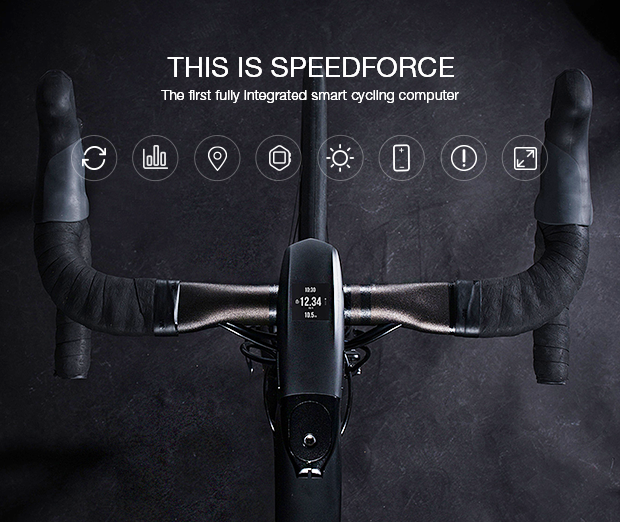
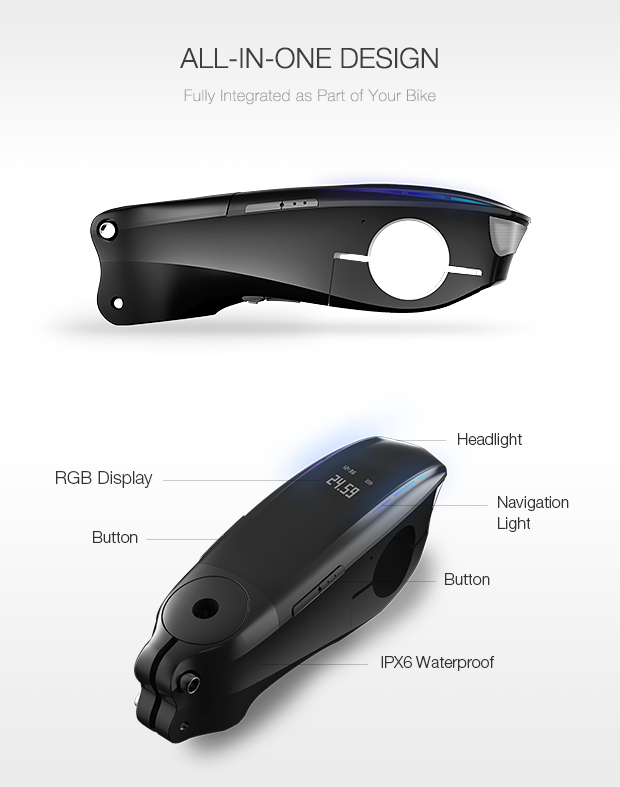
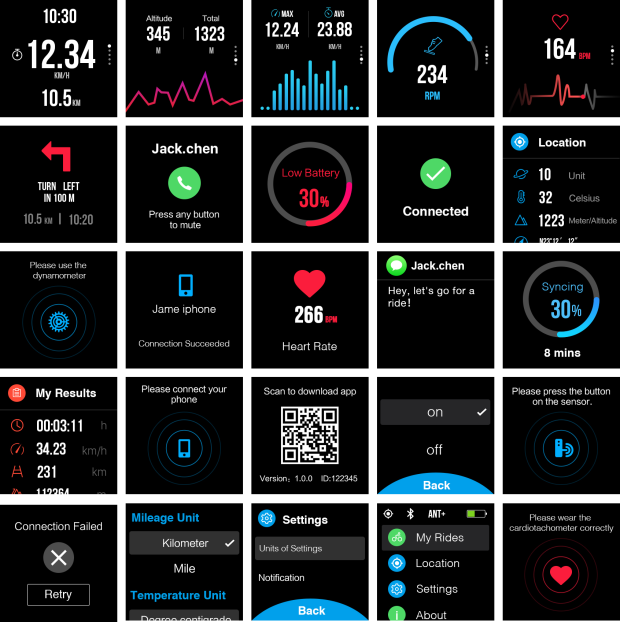
        SpeedForce, is a cycling computer which is fitted in your bicycle by replacing the stem of the bicycle.Cycling computer + GPS + headlight all built in one is a product , SpeedForce designed to meet all the things required by a cyclist. SpeedForce has a shockproof and IPX6 water-resistant body and is powered by a removable lithium-ion battery, which should be good for up to 40 hours of use per charge. That figure will be less if the 150-luminous headlight is used.      

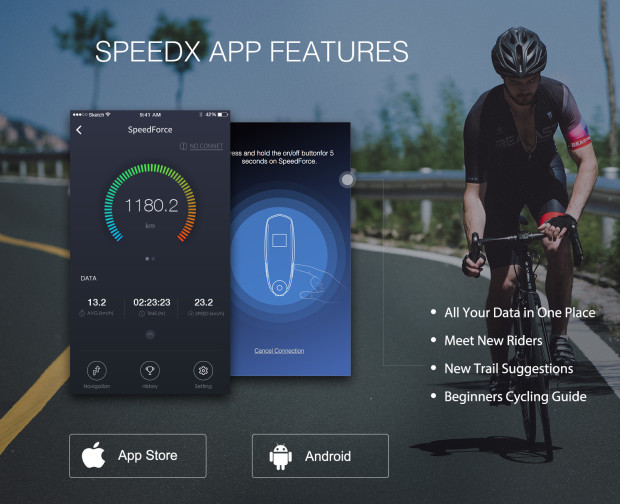
        Using the ANT+ wireless protocol, the GPS-equipped SpeedForce computer communicates with included wheel and pedal sensors to ascertain speed and cadence. It also uses Bluetooth to link up with a dedicated app on the user's iOS or Android smartphone.The app provides a lot more functionality , like for beginners it has a guided tour as well has own cycling community social network , which give leader-boards,city guides,cycling and training advice. It also helps user's to communicate with other cyclist enthusiast as well as allows user's to share photo's as well.
       

          With a built-in GPS chip that syncs with your phone’s GPS, SpeedForce has turn signal indicators that light up to tell you where to turn next without needing to glance at your smartphone.Another method is off-the-road , when you pre-plan the route and push it to SpeedForce. Afterwards, even without your phone, SpeedForce will follow the submitted route.
       

          Sensors on the back of the pedals and wheels work in tandem to provide precise data to identify behaviors and provide recommendations to correct them, like changing gears or pedaling faster, to improve the overall health and safety of the rider. Over time, SpeedForce will recommend training programs and challenges to improve overall performance.


            It has a 1.6-inch full-color transflective screen which has high resolution and has 8 different screens and can even give you phone and text notifications on it.You can toggle the screen's with the side button on the device.


             SpeedForce comes in two versions :-  road and mountain bike . Both the road and mountain bike versions of the SpeedForce, which will weigh 350 and 340 grams, respectively. If you're interested in either, the device is currently the subject of an Indiegogo crowdfunding campaign. A pledge of US$149 will get you one, when and if they reach production. The planned retail price is $179.
SHARE
Facebook Twitter Google

Saturday, October 17, 2015

iPhone 6S & 6S plus : Review

iPhone 6S & 6S plus : Review 

          
              The ' S ' have always had a reputation of just a minor upgrade or a just refreshed release of the original iPhone. The 'S' awaits in the confusion of , that  you to wait for a year or just stay with old.But that trend has changed from quite a while when Apple introduced TouchId to the S series and now this year we have 3D touch , another interesting technology from Apple.We'll that's not all of the added feature in the new iPhone and the question arises , will it be a good upgrade ?

HARDWARE :


           No, your eyes don't deceive you: The 6S and 6S Plus look nearly identical to last year's models, save for a new rose gold color option that oscillates between "vaguely lavender" and "shiny new penny" depending on the light. The sleek, rounded aesthetic might not raise as many eyebrows as it did last year, but it's still one of my favorite iPhone designs. Aside from the pink color option, the other changes aren't particularly noticeable. Both phones are now made from 7000-series aluminum, an alloy used in the aerospace industry that, when compared to last year's phones, makes for a sturdier but similarly lightweight design. The regulatory icons that used to live on the iPhone's back have been removed too, leaving a  "S" logo to let the world know you've upgraded.

           As ever, the Touch ID fingerprint sensor lives in the iPhone's home button, but this year's module is a clear improvement: Apple claims it can pick up your fingerprints up to twice as fast as before. I can't make out exactly what the speed multiple is here, but Touch ID really is blazing fast now, and I can't remember the last time it didn't work on the first try, either.As for the weight, the 6S and 6S Plus do indeed feel noticeably weightier: The 6S weighs in at 143 grams, up from 129, while the bigger 6S Plus now comes in at 192 grams, up from 172.

DISPLAY :


           At first glance, you probably wouldn't notice anything different about the IPS screens on the 6S and 6S Plus. After all, they're the same size as before (4.7 inches and 5.5 inches, respectively) with the same pixel density (326 ppi, or 401 ppi on the Plus). The eagle-eyed among you might catch that both screens are a touch brighter with slightly better color reproduction.So it has a got a new Touch 3D feature let's talk about it.

          By placing a grid of sensors behind the screen, Apple’s engineers allowed the new iPhone's to sense pressure, enabling a z-axis of gestural input. Put another way, you can right-click now. That’s pretty cool! It’s currently limited to native apps and a few third-party selects, so it’s hard to judge how this will play out. You can’t hate on the effort put into this feature, but nothing that currently uses it really improves the user experience dramatically. Someday it might be a level of interaction you can’t live without.

CAMERA :


           For most of us, this is the most important feature of every new iPhone—and phone, period. Each year since launching the iPhone 4, Apple has thoroughly owned all comers. Sure, the occasional Nokia offered optical image stabilization, but the iPhone has always rendered the most natural color, offered great low-light performance, and captured finer detail than its seemingly under powered camera should deliver.


          The 6S is no exception. It has a great rear-facing camera: 12 megapixels (up from eight on the iPhone 6), with a protective sapphire crystal lens and super-fast image capturing. It is not, however, the best camera out there. The Moto X and Samsung Galaxy S6 offer more detail. But this makes absolutely no difference until you start zooming in. Aim the camera at what you want to photograph, and you should be fine.Its front-facing camera, however, is The New Boss. At 5 megapixels, and paired with a cool trick that flashes the screen to lighten dark scenes, the 6S will encourage countless degenerates to ruin the ambiance of your favorite romantic location with an extended arm and a pinkish pop

PERFORMANCE :


            A new kind of touchscreen and some upgraded cameras are one thing, but what about the silicon running under the hood? This year, we've got a new 64-bit A9 chip-set thrumming away inside both the iPhone 6S and 6S Plus, which, according to some bench-marking tools, appear to be made up of dual 1.8GHz Typhoon CPU cores, the GPU and the updated M9 co-processor. Apple never comments publicly about how much RAM its phones have, but recent tear downs show that the new iPhone's have 2GB, just like the most recent iPad Air and Mini. All together, that's the biggest performance increase from one generation to another that we've seen in a while, and it shows.

WRAP UP :


         It's easy to say that these are the best iPhone's Apple has ever made, but that's true every year. Like I said before, a device's worth isn't tied directly to a single feature: The important thing is how all of its components and design flourishes and features and interaction elements fit together as a unified whole. The iPhone 6S and 6S Plus nail it -- mostly. They're great phones: well-built, well thought-out and brimming with potential. So, let's cap this off with a little buying advice. If you have an iPhone 5S and are itching to turn it in, now's the time. If you're an iPhone 6 or 6 Plus owner, this is a worthy upgrade, but no one will fault you for waiting another year.That's why the new 6S and 6S Plus (starting at $649 and $749, respectively, for 16GB models)


SHARE
Facebook Twitter Google